Digital templating · MaltaMeasured on site.Cut from the file.
Digital templating for stone, glass, joinery and marine work. We measure every edge on site with the Leica iCS50 and send you a production-ready DXF. No cardboard, no guesswork.
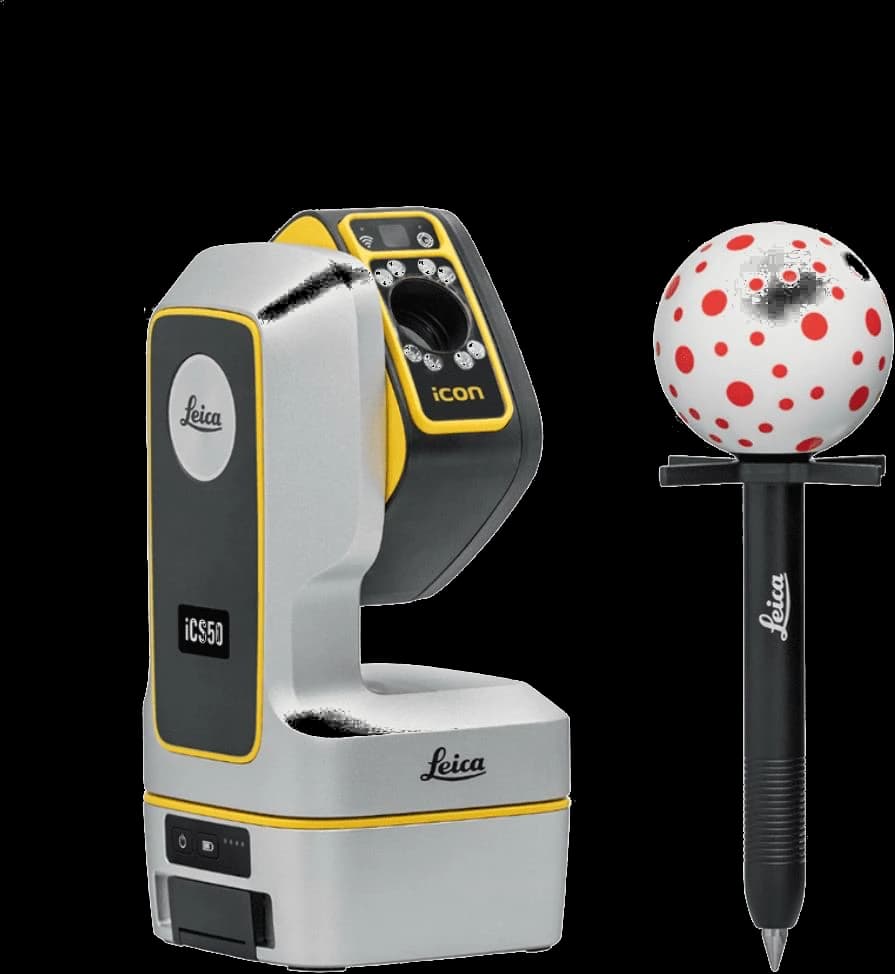
- 1 mm
- vPen accuracy at 10 m
- DXF · PDF
- production-ready files
- 1 visit
- one technician, no cardboard
- Malta & Gozo
- homes, sites and marinas
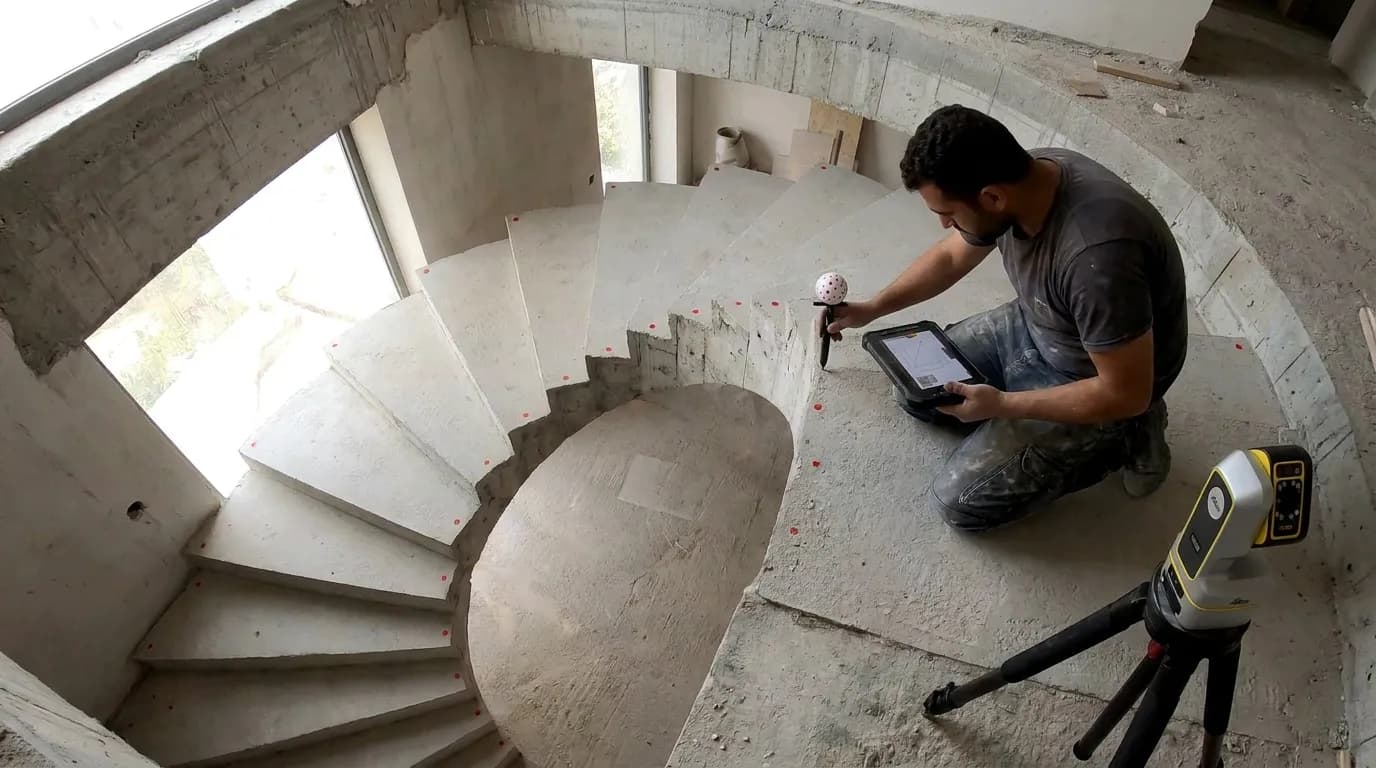 With us
.
One visit. One clean file.
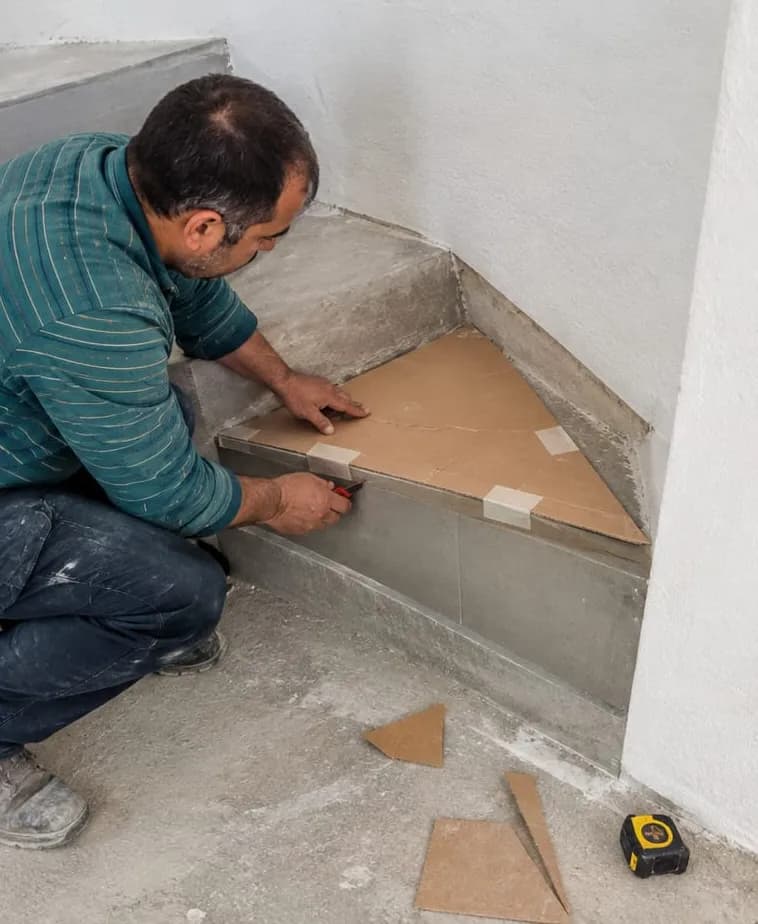
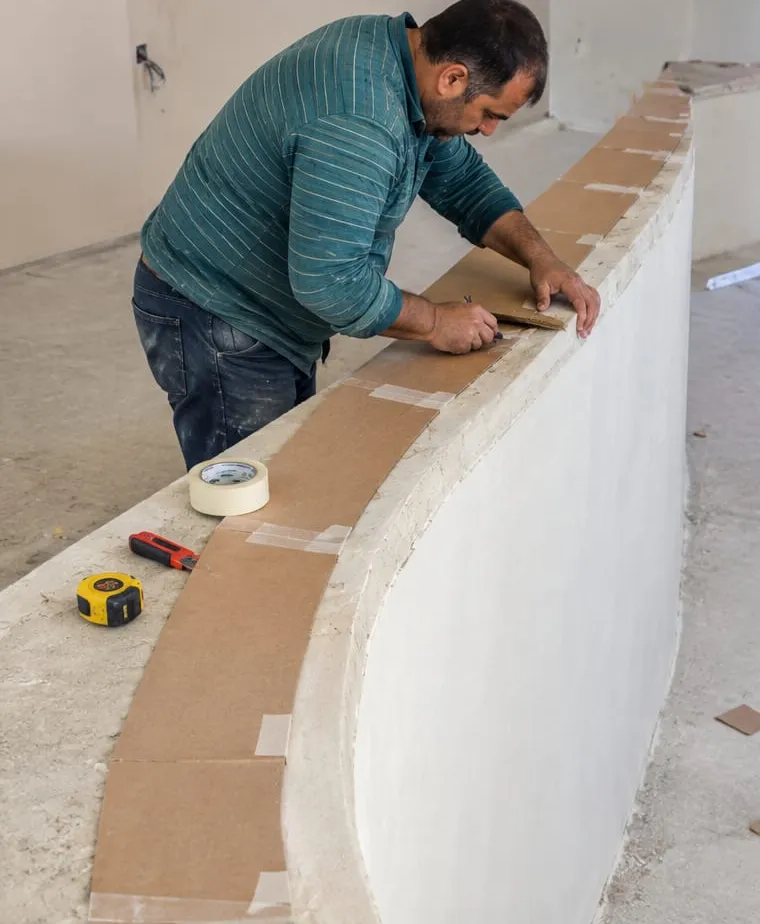
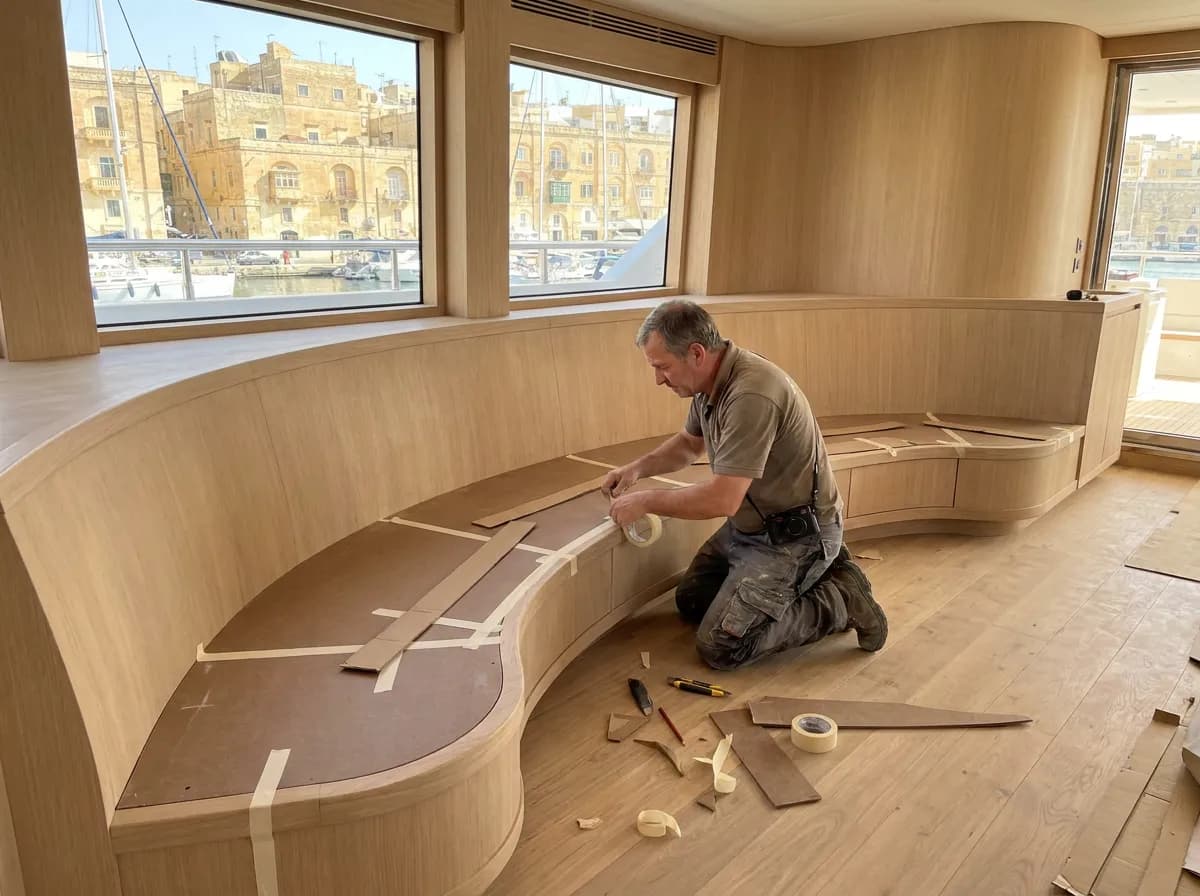
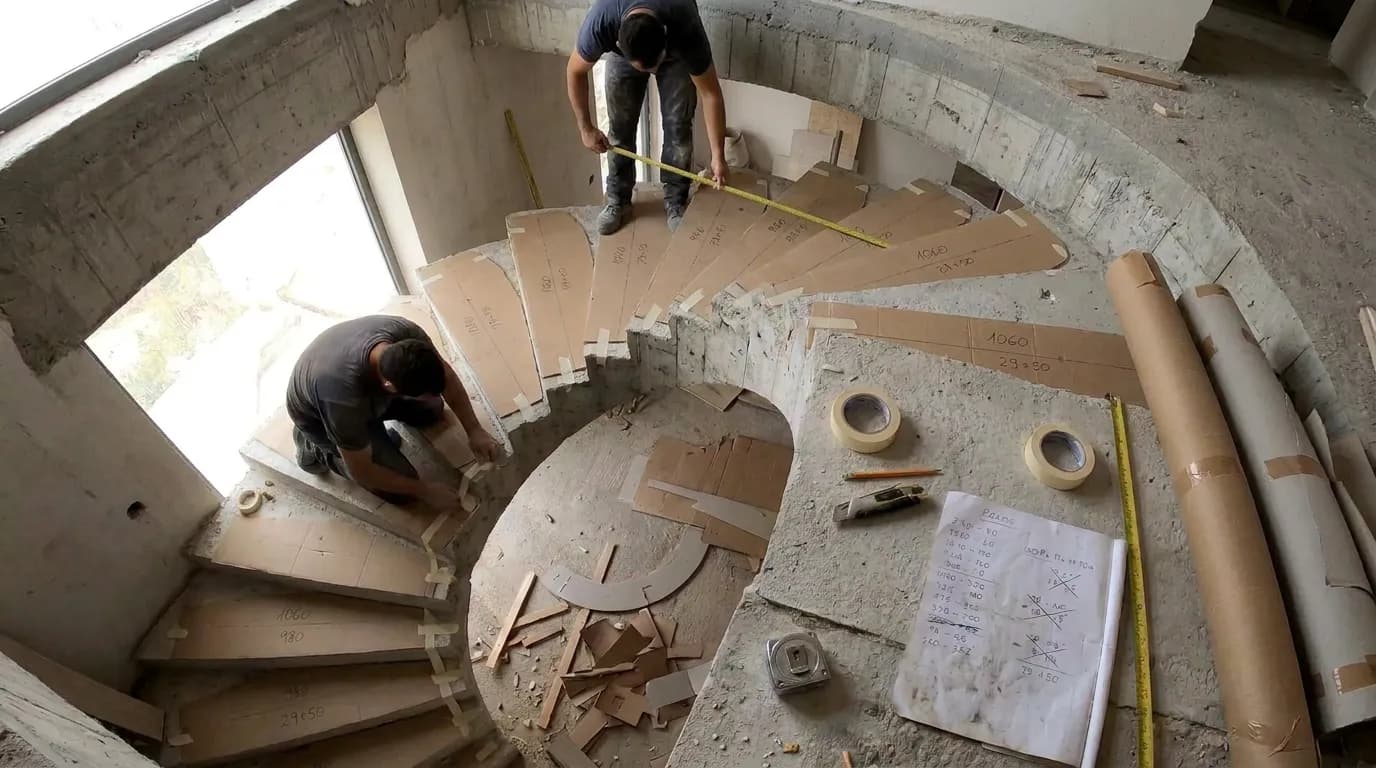 Earlier · by hand
Earlier.
Cardboard, tape and guesswork.
01 What you save
Cardboard templates, or one DXF file.
On most sites a curved wall top, a stair tread or a worktop is still copied in cardboard: cut and taped on site, carried to the workshop, traced again and cut. We measure it on site with the iCS50, point by point, and send a CAD file the fabricator cuts from directly.
Where it is used
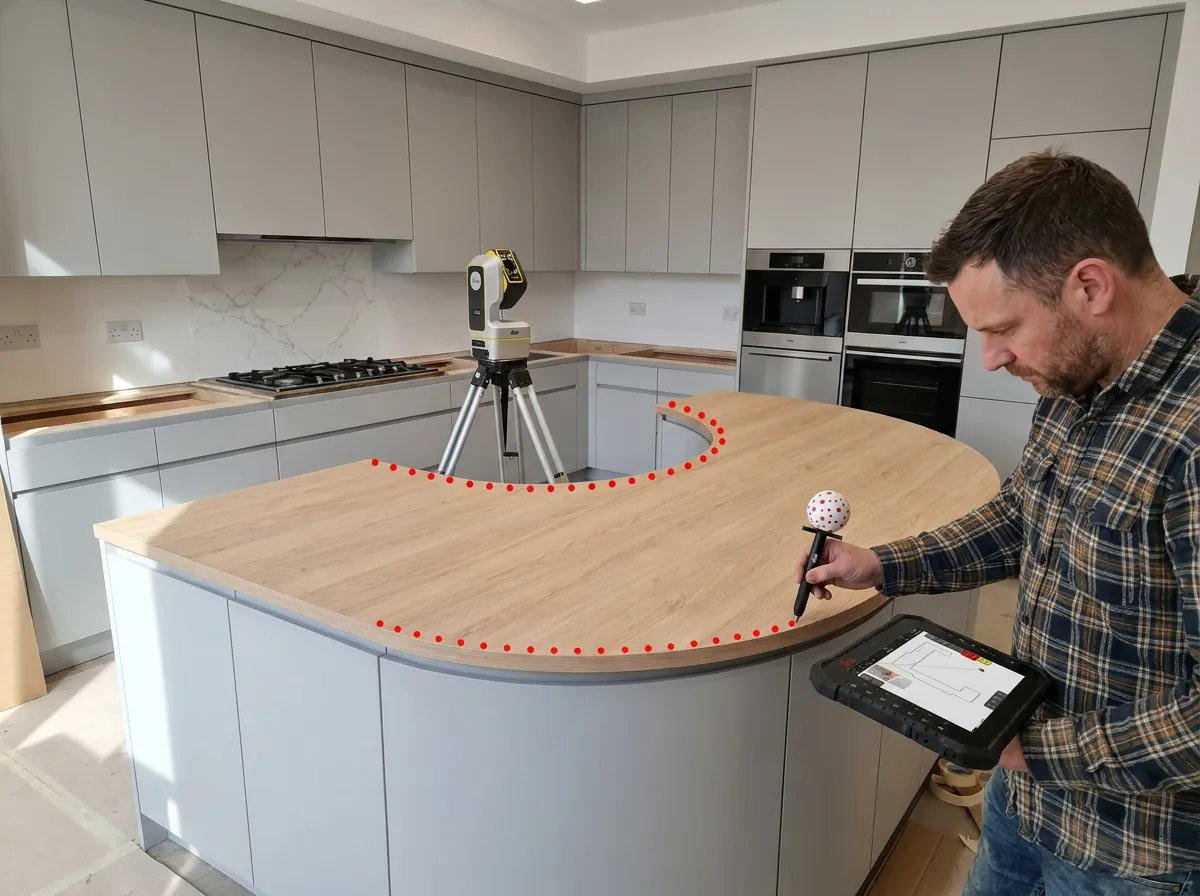 With us
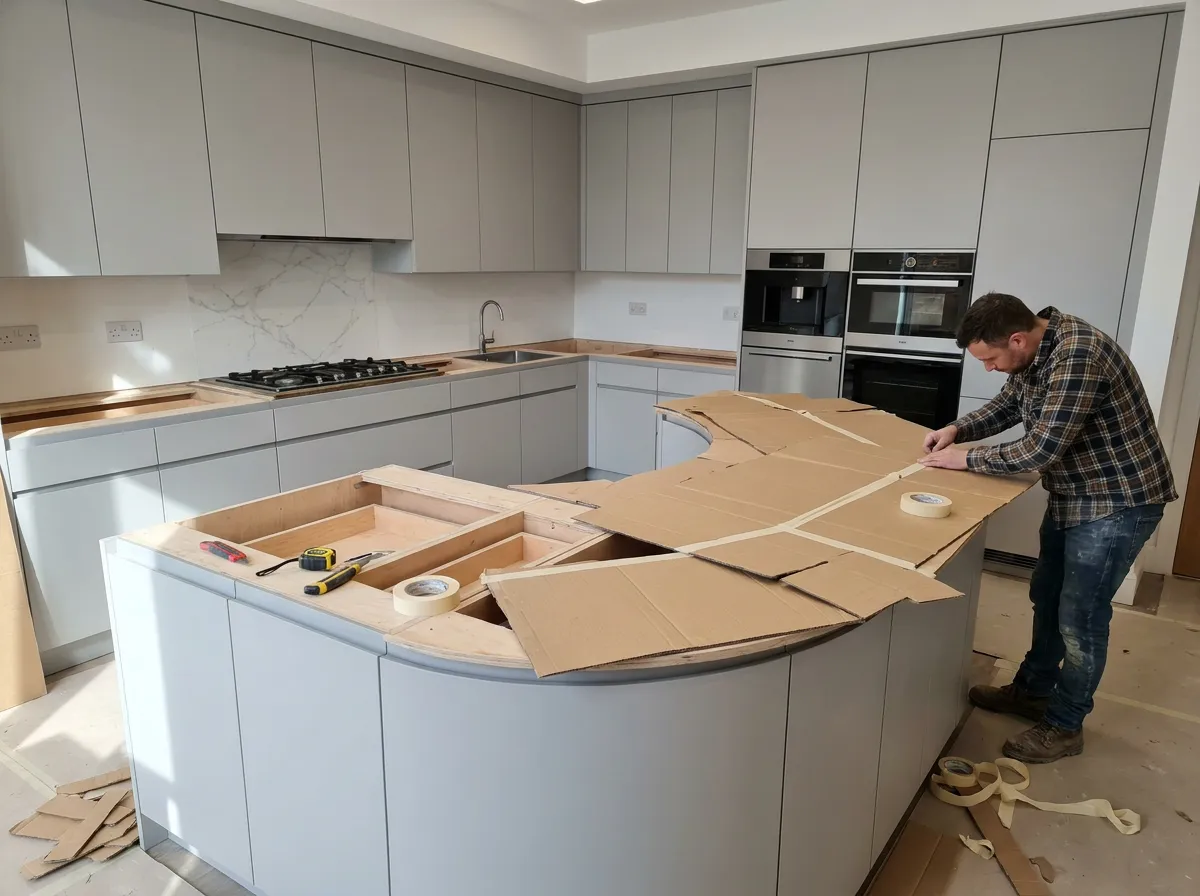
Kitchen worktops and tabletops
Stone and quartz cut to walls that are never straight, with sink and hob cut-outs in the file.
 With us
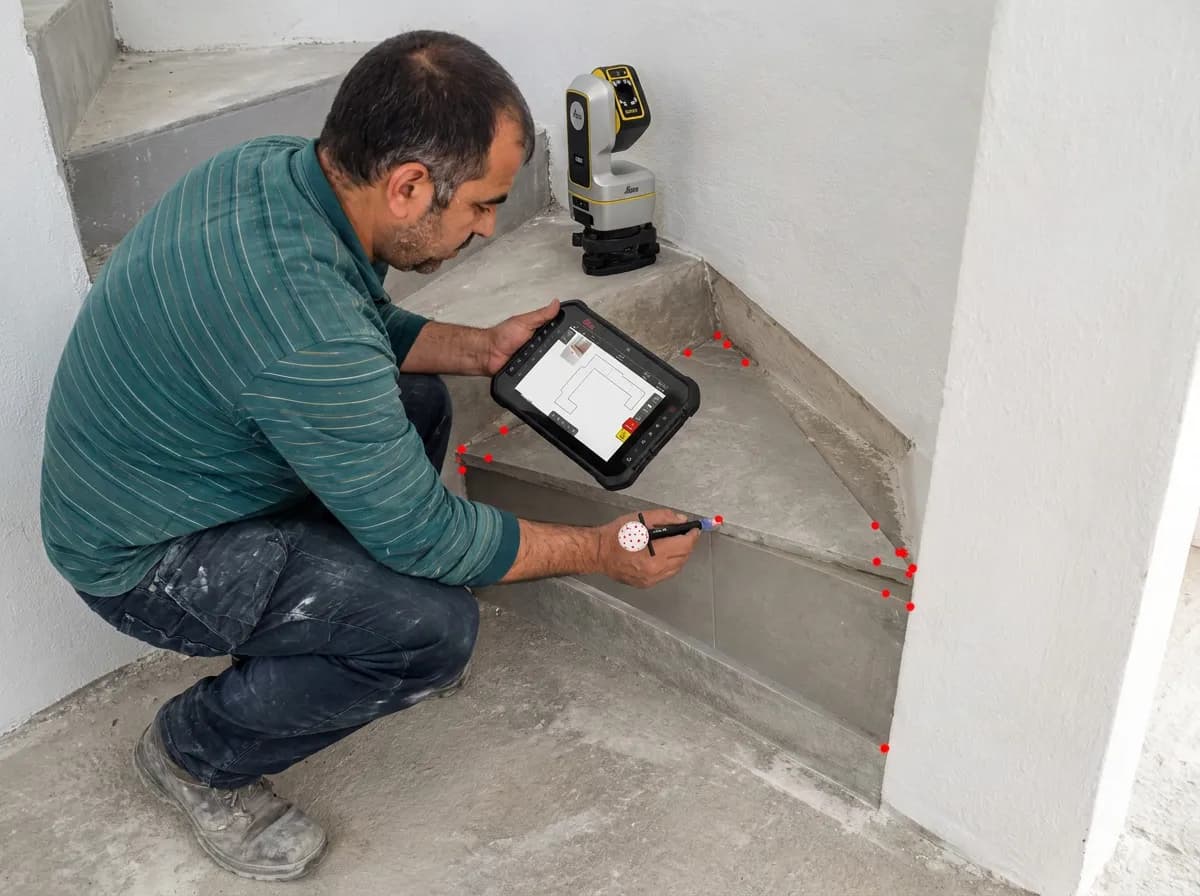
Stairs and steps
Odd-shaped treads and landings measured in place, instead of copied in cardboard one by one.
 With us
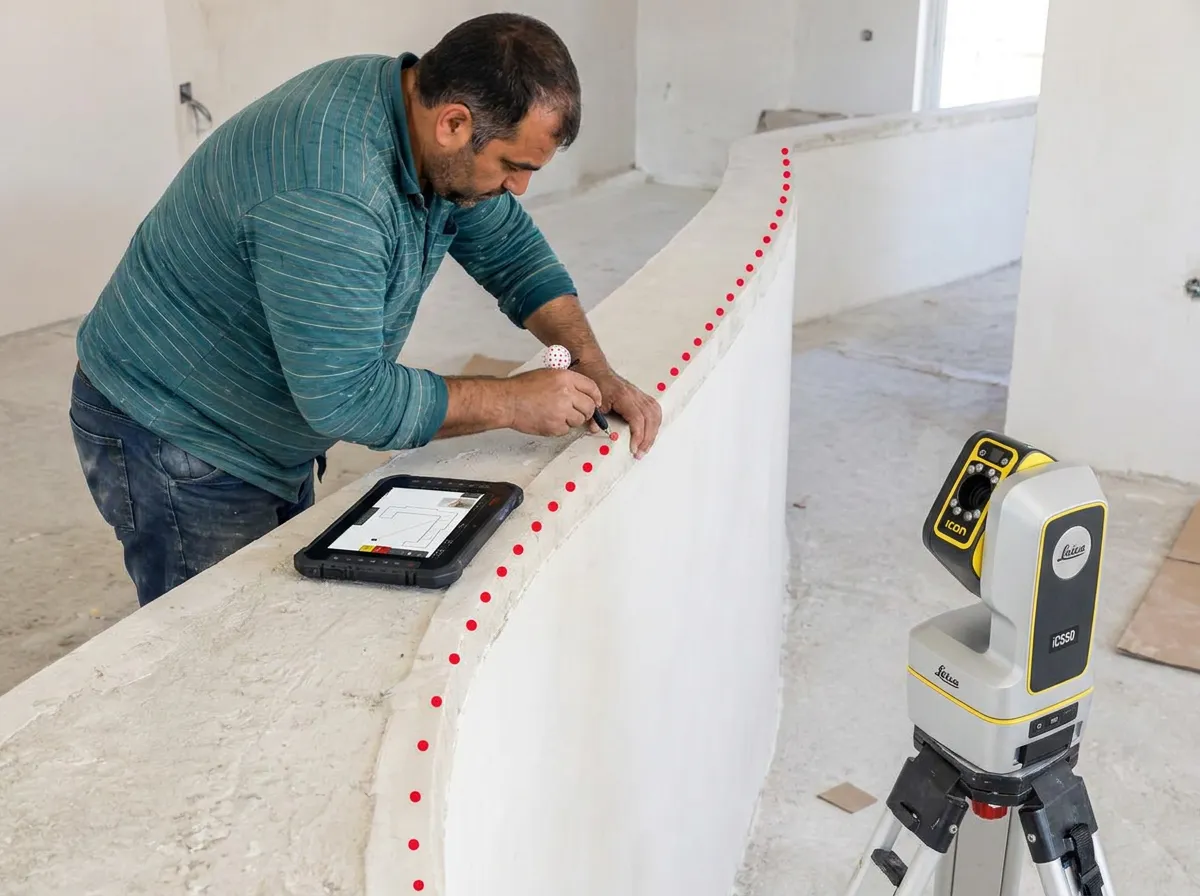
Curved walls and copings
Wall tops, copings and handrails that follow the real curve, not a guess between tape marks.
 With us
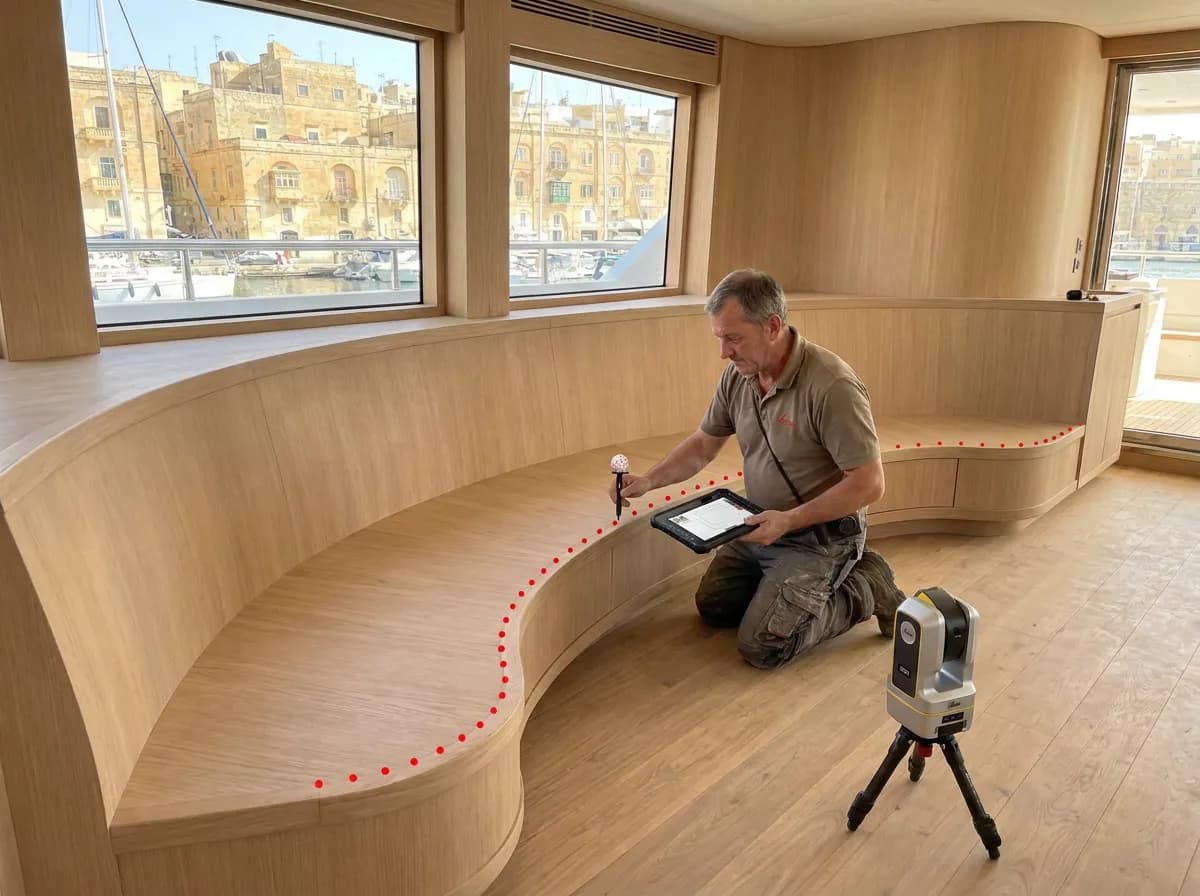
Boats and yacht interiors
Hulls, decks and fitted interiors traced with the vPen. On a boat, almost nothing is straight.
- Time
- One visit, one technician. Nobody on their knees cutting cardboard, no trip back to re-measure.
- Rework
- The template matches the room, so pieces are not trimmed, shimmed or sent back to the workshop.
- Material
- Stone, glass and timber are cut once, to the exact shape. No wasted slabs.
- Money
- Fewer delays and call-backs, for you and for your client. The saving runs down the whole job.
“With us” scenes, the kitchen and the yacht are AI illustrations of typical jobs, not our own projects.
02 The notebook problem
Every number written down is a number that can be read wrong.
A hand template ends up as pencil on paper. Someone reads it back, redraws it in CAD, and the workshop cuts from that copy of a copy. We skip the paper: every point is recorded by the instrument and saved straight into the file your machine cuts from.
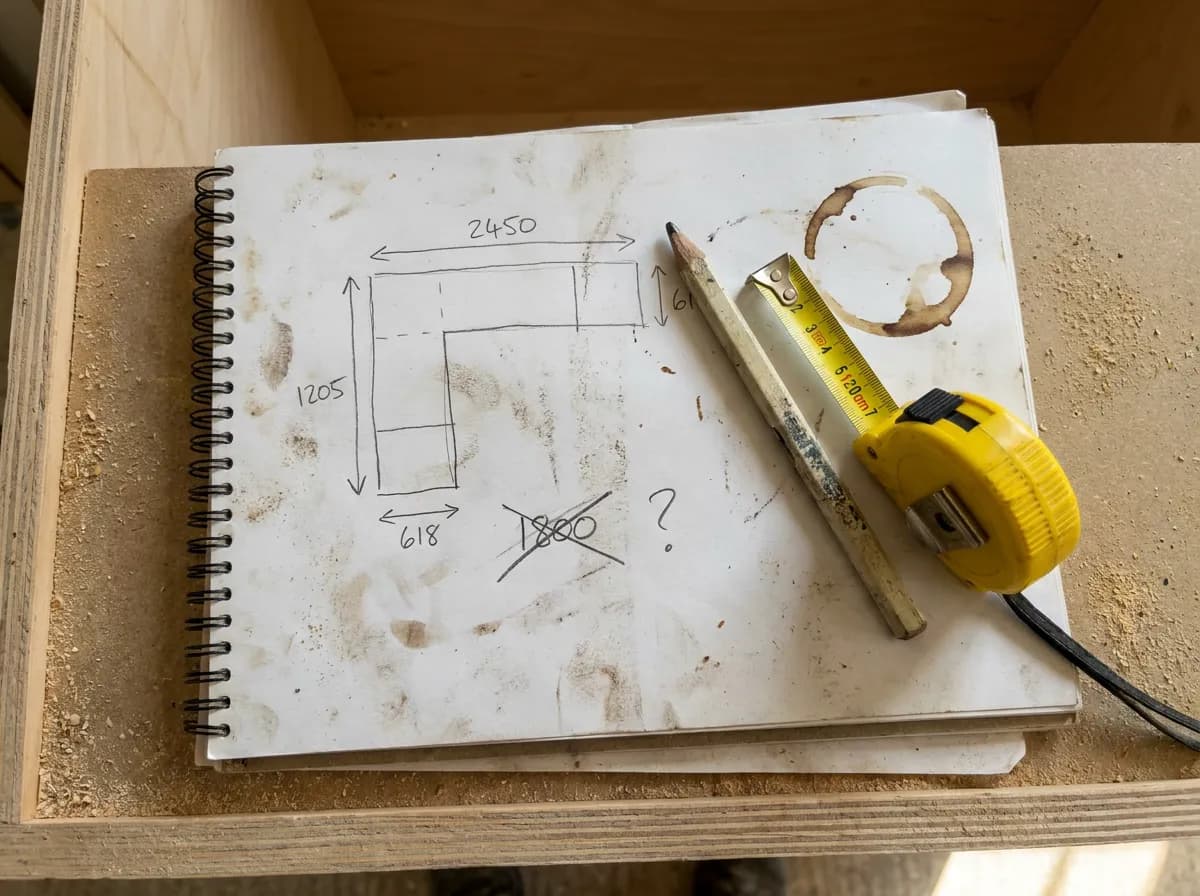
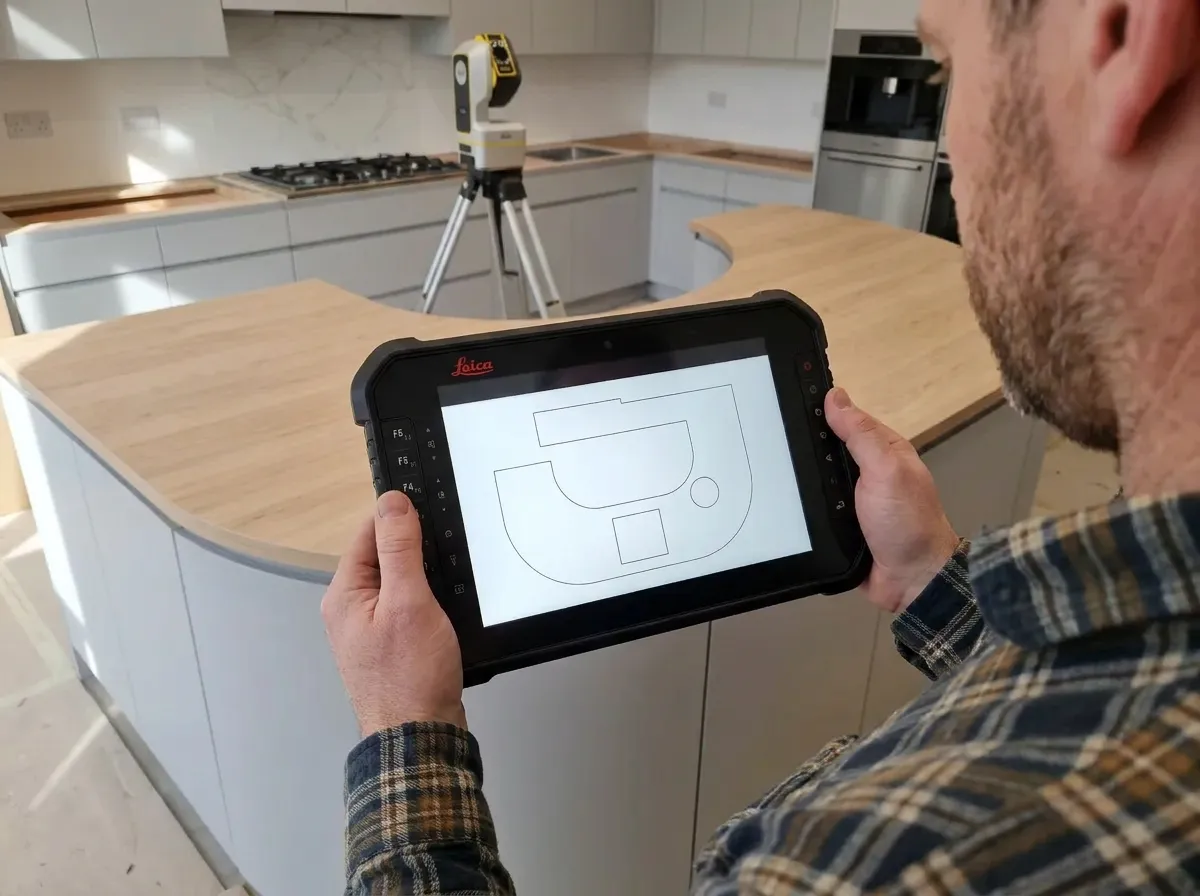
By hand
3 copies by hand
- Measure with a tape
- Copied by hand: Write it on paper
- Copied by hand: Read it back in the office
- Copied by hand: Redraw it in CAD
- Cut
With us
0 copies by hand
- Measure with the vPen
- Cut from the file
A step where someone copies a number by hand, and can copy it wrong.
- Time
- No reading back, no redrawing in the office. The file exists when we leave site.
- Accuracy
- Each point measured to 1 mm at 10 m (Leica specification), and never copied by hand, so a 6 can never become an 8.
03 Why it pays
Your problem. Our fix. What you gain.
- 01The problem
Measured twice, cut wrong once.
Walls are never square and curves are never true. Cardboard and tape can only guess.
What we doWe capture every edge, corner and curve on site, point by point, with the vPen.
What you gainThe piece fits first time. No wasted slab, no second cut.
- 02The problem
Numbers lost between site and workshop.
Notes on paper and cardboard in the van, redrawn in the office, misread once along the way.
What we doThe measurements become a production-ready DXF and PDF, sent straight to your workshop.
What you gainNothing copied by hand, so nothing copied wrong. Cutting starts sooner.
- 03The problem
Your best person is out templating.
Every job needs a site visit, and the fabricator's own time goes on the road.
What we doWe do the site visit for you, with one technician and one instrument.
What you gainYour team stays in the workshop, cutting and fitting.
- 04The problem
The hard shapes take all day.
Curved islands, mitres, out-of-square alcoves, stairs and boat interiors.
What we doThe instrument measures a curve the same way as a straight line: point by point.
What you gainComplex jobs quoted and cut with confidence, not padded for the risk.
- 05The problem
The client waits, and calls.
A re-cut means a new slab, a new date and an unhappy client.
What we doOne accurate template, a clear drawing to approve, then the cut.
What you gainFitting day goes to plan. Fewer call-backs, better reviews.
04 Services
What we template.
Stone and quartz
Kitchen worktops, islands, vanities, fireplaces, backsplashes and shower surrounds.
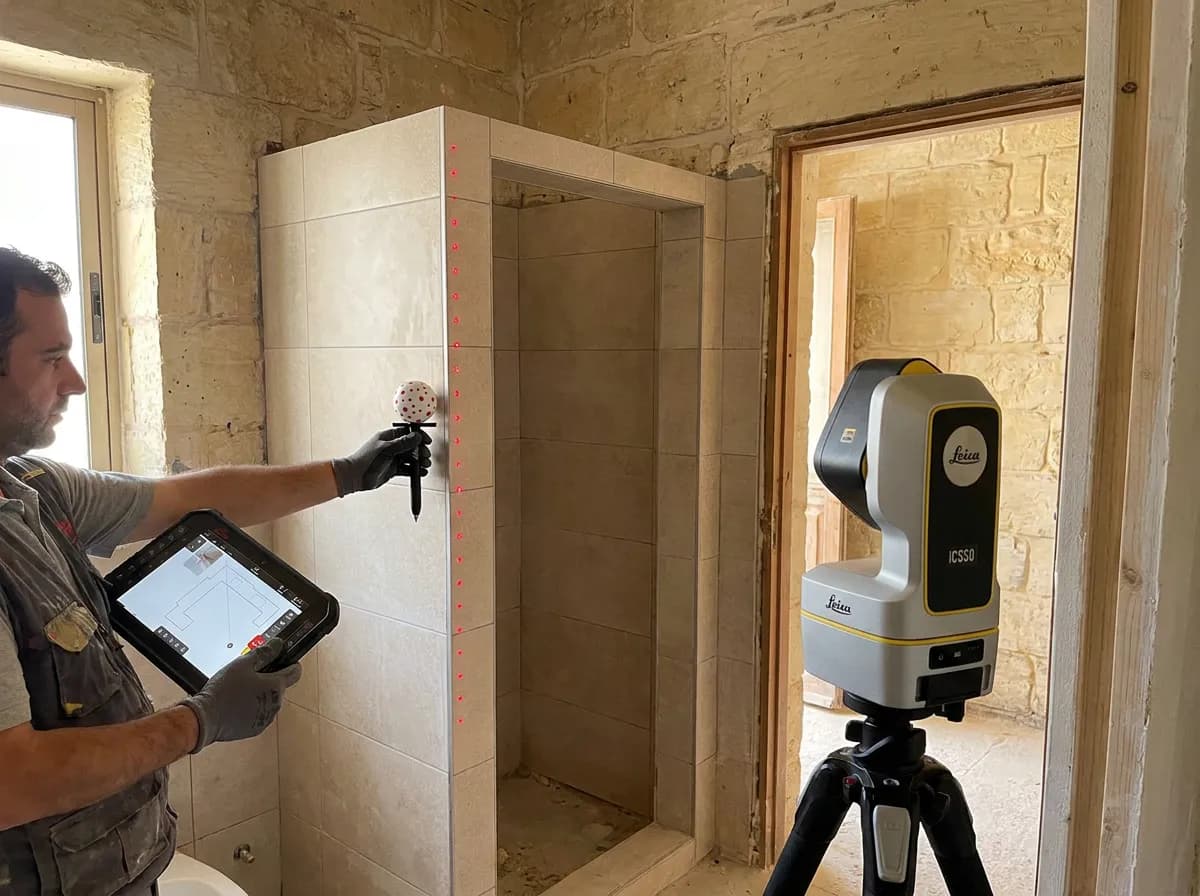
Glass and mirrors
Shower enclosures, splashbacks, balustrades, mirrors, windows and doors.
Joinery and stairs
Fitted furniture, built-in cabinets, tables, panelling, stair treads and handrails.
Boats and yachts
Decks, cabins, saloon furniture, galleys and fitted interiors.
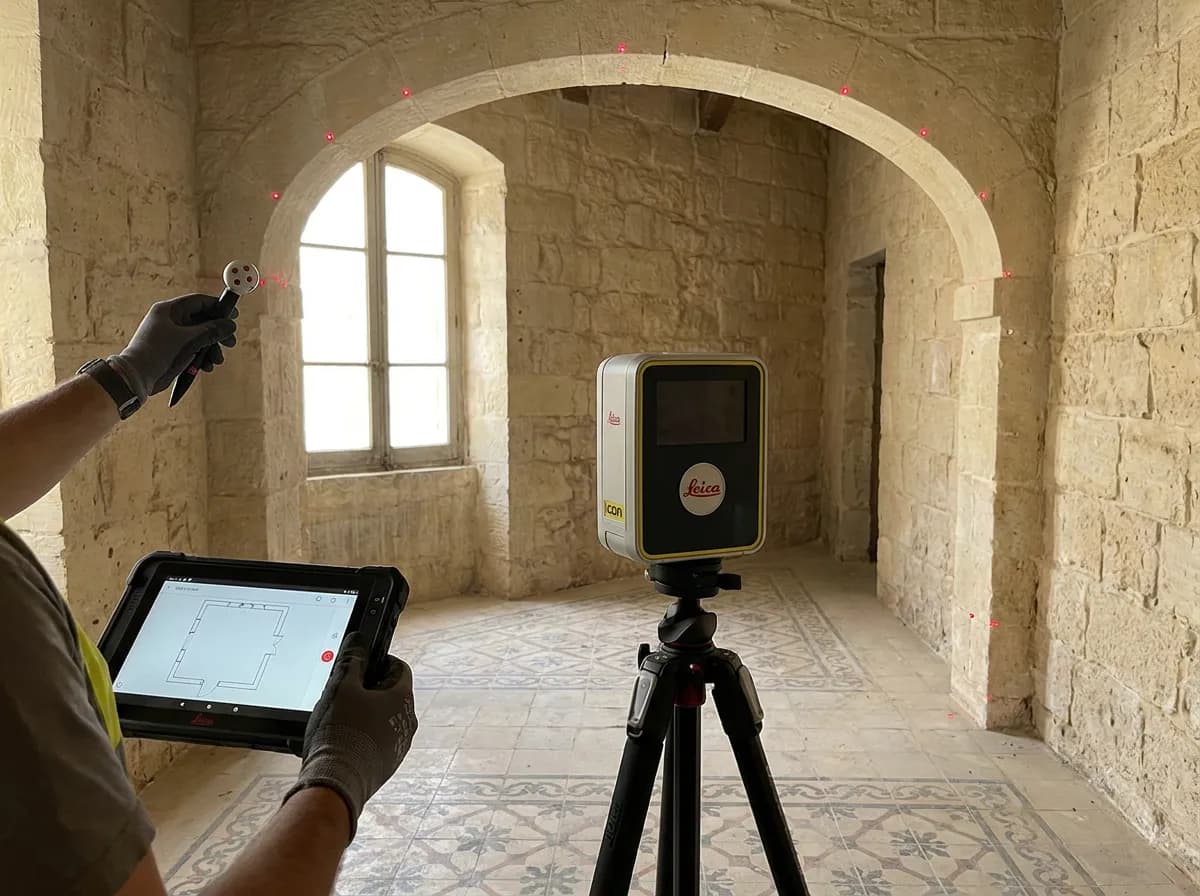
Measured surveys
Accurate room and site measurements for designers, architects and periti.
05 How a job runs
Digital templating, from site visit to cut-ready file.
- 01
Tell us the job
What is being made, the material, and photos or a sketch if you have them.
- 02
Book the visit
Once cabinets, supports or the opening are fixed and ready to template.
- 03
We template on site
One technician measures every edge and cut-out with the iCS50 and vPen.
- 04
You get the files
A production-ready DXF for the workshop and a PDF for your client to approve.
06 Questions
Before you book.
What is digital templating?
Measuring a piece on site with a digital instrument instead of cardboard or hardboard. Every edge, corner and curve is recorded as a point, and the result is a drawing file your workshop cuts from directly.
What files do I get?
A production-ready DXF for your saw, CNC or CAD software, and a PDF drawing with dimensions for your client to approve. DWG on request.
How accurate is it?
Leica specifies 1.0 mm at 10 m for the vPen and the laser point. We check the template on the tablet before we leave site.
When should I book the visit?
When the base is fixed: cabinets installed and level for worktops, the opening finished for glass, the structure in place for stairs or boat interiors.
Which trades do you work with?
Stone and quartz fabricators, glass processors, joiners and stair makers, boatyards and yacht fitters, and designers who need a measured survey. Anywhere in Malta and Gozo.